
August 4, 2026
The Hot Stove Rule
Every kid gets the same lesson before they're old enough to argue back, don't touch the stove, it's hot. I built a career on doing the one thing that lesson is built to prevent.
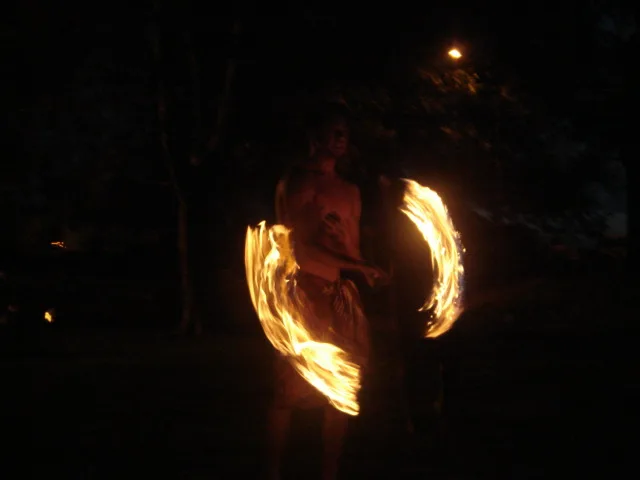
Every kid gets the same lesson before they're old enough to argue back. Don't touch the stove, it's hot. That instruction gets built into a person early enough that it stops being a decision and turns into a reflex, the same way flinching from a loud noise does. I built an entire career on doing the exact thing that reflex is built to prevent.
Kids ask me some version of the same question after almost every show. How do you hold it on your feet? The honest answer is mind over matter, more than people want to hear. If you think you're going to get burned, you're going to get burned. I've had bad burns on my feet before, on nights my head wasn't in the right place. The tongue is easier than people think, because it's already wet, and usually there's only a small amount of fuel sitting on top that burns out fast.
Fire walking is a different discipline entirely, more science than most people expect. Your feet sweat fast enough that a thin barrier forms between skin and coals. The counterintuitive part is that you have to walk slow and steady. Panic is what gets people burned, not the coals themselves, because panic makes you press down or catch something between your toes.
What most people don't know is how recent the art form actually is. It used to be called the Siva Aylao, which means dance of the blade, and it wasn't fire at all originally, just a shiny blade spun as a show of force in Samoan culture. A performer named Freddie Letuli was touring with it, and while he was performing alongside variety fire acts in Los Angeles, he had the idea to wrap wood and a towel around the blade, light it, and keep spinning. That's how the Samoan fire knife dance was born, in the 1960s. I've spent twenty-eight years of my life inside a tradition that's younger than most people assume when they watch it, mine included the first time I heard the real history.
Newer performers stepping into this world carry real fear when they start. They should. The reflex that fear comes from never fully goes away. What gets built on top of it is training, one controlled rep at a time, until the thing everyone warned me away from became the most natural motion I own.